
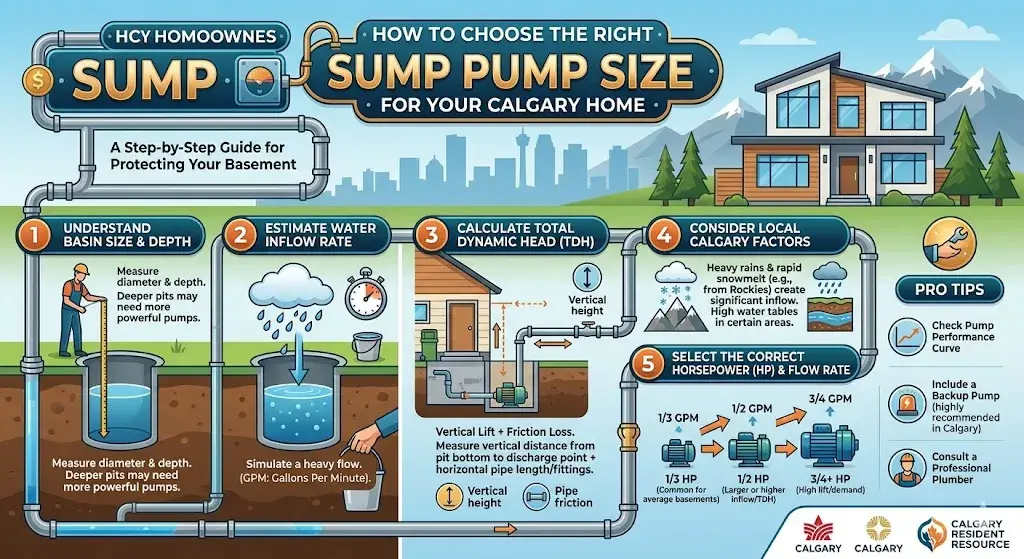
Basement flooding is one of the most common concerns for homeowners in Calgary, especially during heavy rainstorms, spring snowmelt, and sudden weather changes. Choosing the right sump pump size for Calgary home protection is essential if you want to avoid costly water damage, foundation issues, and long-term moisture problems.
A properly sized sump pump does more than remove water. It improves drainage performance, supports basement moisture control, and helps create a flood-resistant basement that can withstand Calgary’s unpredictable weather conditions. However, many homeowners either install pumps that are too small to handle water volume or oversized systems that waste energy and wear out faster.
This guide will explain everything you need to know about sump pump size Calgary, including horsepower, flow rates, discharge requirements, and the best options for residential properties. Whether you are replacing an old unit or planning a new sump pump installation Calgary, understanding sizing is the first step toward reliable basement flood protection.
Understanding How Sump Pumps Work
A sump pump is part of a home’s basement water removal system. It is installed inside a sump pit, usually located at the lowest point of the basement or crawl space. When groundwater or excess rainwater collects in the pit, the pump automatically activates and removes water through a sump pump discharge line away from your home’s foundation.
In Calgary, where seasonal storms and rapid snowmelt can increase water table pressure, sump pumps play a critical role in groundwater protection and basement leak prevention.
Many homeowners invest in a sump pump after reading about the importance of flood prevention. If you want to understand why these systems are becoming increasingly necessary in Alberta homes, this guide on sump pumps for Calgary homeowners provides additional insights: Why Calgary Homes Need Sump Pumps
Why Proper Sump Pump Sizing Matters
Choosing the correct sump pump capacity is one of the most important decisions homeowners can make. A unit that is too weak may fail during heavy rainfall, while an oversized system can cycle too frequently and reduce the pump’s lifespan.
Problems With an Undersized Pump
- Water accumulation during storms
- Increased risk of basement flooding
- Poor water removal efficiency
- Overworked motor and premature failure
- Foundation water damage
Problems With an Oversized Pump
- Short cycling
- Increased energy consumption
- Faster mechanical wear
- Reduced drainage efficiency
This is why every homeowner should follow a proper sump pump sizing guide instead of simply buying the largest available unit.
Key Factors That Determine the Right Sump Pump Size
1. Basement Size and Water Volume
The square footage of your basement directly affects how much water your sump pump may need to handle. Larger basements often require greater drainage capacity because more water can accumulate around the foundation.
Homes with finished basements should especially prioritize basement flood prevention Calgary strategies because water damage restoration costs can become extremely expensive.
2. Calgary’s Climate and Heavy Rainfall
Calgary weather can change rapidly. Heavy rainfall, spring thaw, and frozen ground conditions often contribute to sudden water accumulation around residential foundations.
If your property experiences recurring drainage issues, you may need the best sump pump for heavy rain in Calgary rather than a basic entry-level system.
Homes in flood-prone neighborhoods often benefit from:
- Higher pump horsepower
- Improved drainage systems
- Backup power systems
- Enhanced stormwater management solutions
3. High Water Table in Calgary
Some areas experience naturally high groundwater levels. A high water table Calgary property places extra pressure on basement foundations and increases the likelihood of continuous water intrusion.
If your sump pit fills frequently, you may need:
- Increased sump pump flow rate
- Larger sump basin
- More powerful motor
- Battery backup sump pump
4. Sump Pit Dimensions
Your sump pit size also affects pump selection. A small pit may cause rapid cycling, while a properly sized basin allows smoother operation and improved drainage performance.
Following a proper sump pit size guide ensures:
- Better water storage before activation
- Reduced motor stress
- Longer pump lifespan
5. Vertical Lift and Discharge Distance
When learning how to size a sump pump, homeowners must consider head pressure. This refers to how high and far the pump must move water.
A home with a long sump pump discharge line or steep vertical lift requires more power than a system discharging a short distance.
6. Flow Rate Requirements
Flow rate measures how many gallons per minute a sump pump can remove.
Many homeowners ask: How many gallons per minute should a sump pump handle?
The answer depends on:
- Water entry speed
- Basement size
- Soil saturation
- Drainage conditions
Typical residential systems handle between 35–60 gallons per minute, though larger homes may require higher performance systems.
Understanding Sump Pump Horsepower
One of the most confusing aspects of choosing a sump pump is horsepower selection. The right horsepower depends on your home’s flood risk and drainage demands.
1/3 HP Sump Pumps
A 1/3 HP unit is suitable for:
- Small to medium basements
- Moderate groundwater conditions
- Average residential drainage
Many homeowners ask: Is 1/3 HP enough for a sump pump?
For homes with minimal flooding concerns, yes. However, Calgary properties exposed to heavy storms may need stronger systems.
1/2 HP Sump Pumps
A 1/2 HP pump is one of the most common choices for residential sump pump Calgary systems because it provides:
- Better water removal efficiency
- Improved heavy rain performance
- Reliable drainage during snowmelt
If you are wondering whether you need a 1/3 HP or 1/2 HP sump pump, most Calgary homes benefit from the additional protection of a 1/2 HP system.
3/4 HP Sump Pumps
These high-capacity systems are ideal for:
- Severe flooding risks
- Large basements
- High groundwater pressure
- Advanced flood protection system Calgary setups
However, oversized pumps should only be installed when necessary.
Types of Sump Pumps for Calgary Homes
Submersible Sump Pump
A submersible sump pump sits inside the sump pit underwater. These systems are:
- Quiet
- Efficient
- Ideal for finished basements
They are often considered the best sump pump for Calgary homes because they handle high water volumes effectively.
Pedestal Sump Pump
A pedestal sump pump keeps the motor above the pit. These units are:
- Easier to maintain
- Typically less expensive
- Better for smaller pits
However, they are usually louder than submersible systems.
Battery Backup Sump Pump
Storms can cause power outages precisely when homeowners need flood protection the most.
A battery backup sump pump ensures continued operation during:
- Electrical failures
- Severe weather
- Emergency flooding conditions
Backup systems are especially useful for heavy rain basement protection.
Step-by-Step Sump Pump Sizing Guide
If you are wondering how to choose the right sump pump size for your home, follow these steps.
Step 1: Measure Basement Dimensions
Determine the square footage and assess flood-prone areas.
Step 2: Check Water Entry Speed
Observe how quickly water enters the sump pit during storms.
Step 3: Measure Vertical Lift
Calculate the distance water must travel upward before discharge.
Step 4: Determine Required Flow Rate
Estimate gallons per minute based on flooding history.
Step 5: Match Horsepower to Conditions
Choose the correct sump pump horsepower for home drainage needs.
This process helps homeowners avoid purchasing undersized or oversized systems.
Signs Your Sump Pump Is Too Small
Homeowners often ignore early warning signs until flooding occurs.
Common Signs Include:
- Constant pump operation
- Water remaining in the pit
- Slow drainage during storms
- Excessive cycling
- Basement leaks
- Water overflow prevention failures
If your system struggles during rainfall, you may need sump pump replacement Calgary services.
You can also learn the early warning signs of failing equipment here:
Warning Signs You Need Sump Pump Repair
Choosing the Best Sump Pump for Calgary Homes
The best sump pump system for cold climates should include:
- Durable construction
- Reliable float switch
- Strong drainage capacity
- Backup power system
- Freeze-resistant discharge design
Cold Calgary winters can freeze discharge lines if they are not installed correctly. Professional installation helps prevent these issues and improves long-term system reliability.
If you are comparing installation costs before upgrading your system, this helpful resource explains current pricing trends:
Sump Pump Installation Cost Guide 2026
Professional Sump Pump Installation Calgary
While some homeowners attempt DIY installations, professional service is strongly recommended for proper sizing and long-term performance.
Experienced Calgary plumbing services professionals can:
- Evaluate groundwater conditions
- Calculate drainage requirements
- Install proper discharge systems
- Improve water overflow prevention
- Ensure code-compliant installation
Professional installation also reduces the risk of improper sizing and foundation drainage issues.
For homeowners researching full-service solutions, professional Calgary sump pump services can help ensure the correct setup for your property’s unique conditions.
Sump Pump Maintenance Tips
Even the best sump pump requires regular maintenance.
Essential Maintenance Tasks
- Test the float switch
- Clean debris from the pit
- Inspect the discharge line
- Check backup battery systems
- Ensure proper drainage performance
Routine inspections improve water removal efficiency and help prevent unexpected failures.
If you want a detailed maintenance checklist, this guide offers useful seasonal recommendations:
Complete Sump Pump Maintenance Guide
Before spring snowmelt season arrives, it is also smart to test your system thoroughly:
How to Test Your Sump Pump Before Spring
Homeowners still deciding whether a sump pump is worth the investment can also review these benefits of installing a sump pump for additional guidance.
Benefits of Installing a Sump Pump
Conclusion
Choosing the right sump pump size for Calgary home protection is essential for preventing basement flooding, protecting your foundation, and maintaining long-term property value.
The ideal system depends on several factors, including:
- Basement size
- Water table pressure
- Drainage capacity
- Flow rate requirements
- Calgary’s climate conditions
By understanding how to size a sump pump correctly, homeowners can improve basement waterproofing Calgary performance while avoiding costly water damage.
Whether you need a new installation, upgraded drainage system, or sump pump replacement Calgary service, investing in the proper system today can save thousands in future repairs.
FAQs
What size sump pump do I need for my house?
Most Calgary homes use either a 1/3 HP or 1/2 HP sump pump. The correct size depends on basement dimensions, groundwater levels, and flooding risk.
Is 1/3 HP enough for a sump pump?
A 1/3 HP sump pump is often sufficient for homes with moderate water intrusion. However, homes exposed to frequent storms or high groundwater may require a 1/2 HP system.
Should I choose 1/2 HP or 3/4 HP sump pump?
A 1/2 HP system works well for most residential properties. A 3/4 HP pump is better for severe flooding conditions or large basements.
How long do sump pumps last?
Most sump pumps last between 7–10 years with proper maintenance and regular inspections.
What is the best sump pump for Calgary weather?
Submersible sump pumps with battery backup systems are often considered the best option for Calgary’s heavy rain and cold climate conditions.
How much water can a sump pump handle?
Residential sump pumps typically remove between 35–60 gallons per minute depending on horsepower and system design.
Can a sump pump prevent basement flooding?
Yes. A properly sized sump pump significantly reduces the risk of basement flooding by removing excess groundwater before it accumulates.
How often should sump pumps be replaced?
Most experts recommend replacement every 7–10 years or sooner if the system shows signs of wear, slow drainage, or repeated failures.