
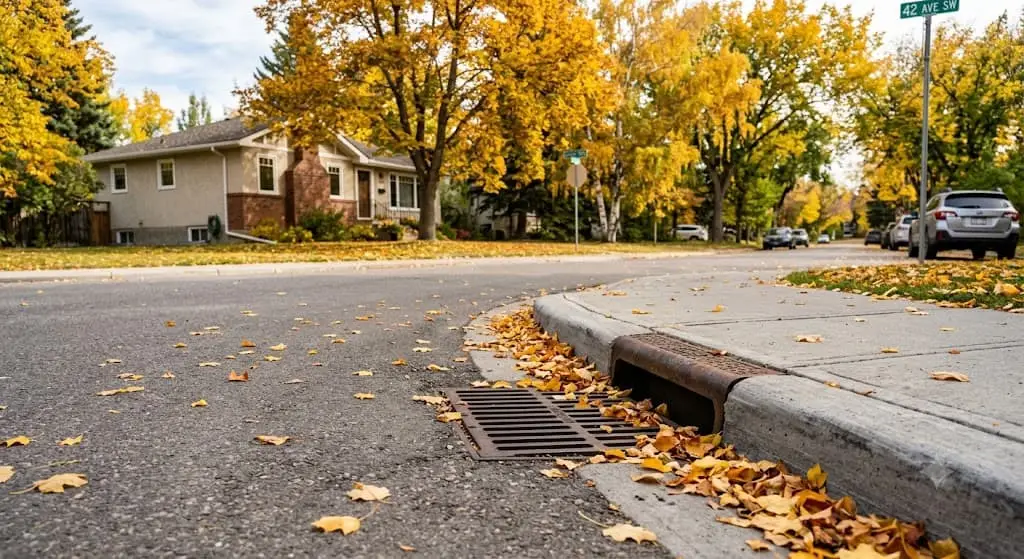
When heavy rain or spring snowmelt hits Calgary, your outdoor drains have one job: carry water away from your home before it reaches your foundation. When those drains are packed with leaves, silt, gravel, or tree roots, the water goes somewhere else, usually toward window wells, garages, and basement walls.
Most homeowners never think about residential storm drain cleaning until water is already pooling. This guide explains how outdoor, underground, and storm drains work, how to spot a clog early, what you can safely clear yourself, and when to call a professional.
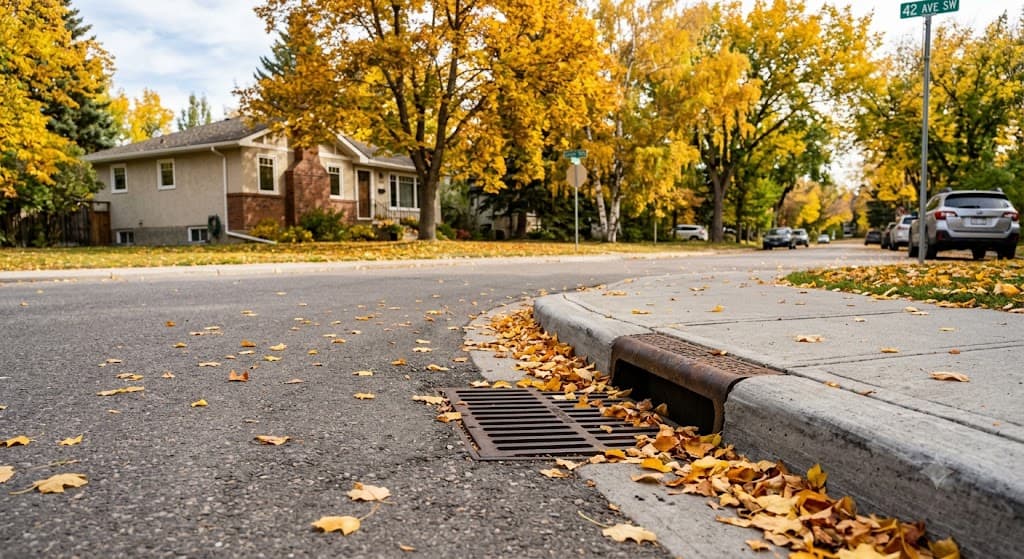
Quick Answer: What Is Residential Storm Drain Cleaning?
Residential storm drain cleaning is the removal of debris, sediment, and roots from the outdoor and underground drains that carry rain and meltwater away from your home, including yard drains, catch basins, window well drains, and buried downspout lines. Clear surface debris each spring and fall, and call a plumber if water backs up.
Outdoor, Underground and Storm Drains: What’s the Difference?
These terms overlap, so here is how they break down on a typical Calgary property:
| Drain type | What it does | Common problem | Who handles it |
| Yard drain or catch basin | Collects surface water from low spots | Leaves, silt, and gravel block the grate | Homeowner |
| Buried downspout line | Carries roof runoff underground, away from the house | Debris, roots, or collapsed sections | Homeowner |
| Window well drain | Stops water pooling at basement windows | Soil and debris clog the drain | Homeowner |
| Driveway or garage drain | Collects runoff from paved areas | Sediment buildup | Homeowner |
| Street storm drain | Moves street runoff into the City’s storm system | Blocked grates, ponding on the road | City of Calgary |
Generally, the City looks after drains on public streets, while drainage on your own lot is your responsibility. If a street storm drain is blocked or water is ponding on the road, report it through 3-1-1. The City’s drainage bylaw brochure also explains that contaminants are not allowed to enter the storm system, so never wash paint, oil, or chemicals into a storm drain.
Why Outdoor Drains Clog in Calgary
Calgary’s weather is hard on drainage systems. The most common causes are:
- Freeze-thaw cycles. Chinook-driven melt and refreeze can leave ice blocking grates and pipe openings, so meltwater has nowhere to go.
- Spring debris. Fall leaves, winter sand, and gravel wash into drains as the snow melts.
- Tree roots. Roots seek moisture and can work into pipe joints, especially in established neighbourhoods with mature trees.
- Sediment and landscaping. Soil, mulch, and rock slowly fill catch basins and window well drains.
- Damaged pipe. Buried lines can crack, sag, or collapse over time, creating low spots where debris collects.
Signs Your Outdoor or Underground Drain Is Clogged
Watch for these warning signs:
- Water pooling around a drain for hours after the rain stops
- A drain that empties slowly, or not at all
- Gurgling or bubbling from a yard drain
- Downspouts overflowing or dumping water beside the foundation
- A soft spot or sunken patch of lawn along an underground line
- Water or dampness in basement window wells
- A foul odour near an outdoor drain
Indoor drains have their own symptoms. Our guide to the warning signs your Calgary home needs drain cleaning covers those.
How to Unclog an Outdoor Drain: Step by Step
For a slow or partly blocked yard drain on your own property, try this:
- Clear the surface. Wearing gloves, remove leaves, gravel, and debris from the grate by hand or with a small rake. Never lift or remove grates on public street drains.
- Check the basin below. If the grate lifts out, scoop sediment from the catch basin with a small shovel or a wet/dry vacuum.
- Flush with a hose. Run water for a few minutes and watch how quickly it drains.
- Use a drain snake for soft clogs. Feed a drain auger gently into the pipe to break up leaves and muck.
- Re-test. Pour in a bucket of water and time how fast it clears.
- Stop and call a pro if water backs up, flow stays slow, or you smell sewage.
Safety note: Skip chemical drain cleaners outdoors. They can damage pipes and soil and rarely clear debris or roots. Never climb into a drain pipe, and never use an open flame to thaw a frozen drain.
How to Clean a Catch Basin
A catch basin is a small chamber under a yard or driveway grate that traps sediment before water enters the pipe. Because it fills gradually, clean it before it is full. Remove the grate if it is on your property, scoop the silt and debris into a bucket, rinse the walls, and pour in a bucket of water to confirm it drains freely. Put the debris in the trash, never back into the drain or onto the street.
When DIY Isn’t Enough: Underground Drain Cleaning
Surface cleaning only reaches the first few feet. If the grate is clear and water still backs up, the blockage is deeper in the line, and that calls for underground drain cleaning with professional equipment. Typical culprits are packed sediment, intruding roots, or a sagging or collapsed section of pipe.
A professional underground drain cleaning service usually starts with a sewer camera inspection to locate the blockage and check the pipe’s condition. From there, technicians clear the line with a cable machine or hydro jetting, which uses high-pressure water to scour the pipe walls. The camera footage also shows whether the line needs cleaning alone or a repair, which saves you from guessing.
If you are searching for storm sewer cleaning near me because water is already backing up, call ProStar right away. For after-hours problems, our emergency plumbing team is available 24/7, and our professional drain cleaning service covers the rest.
Outdoor Drain Cleaning Service: What to Expect
A professional outdoor drain cleaning service from ProStar typically follows these steps:
- Assessment. We ask where and when water backs up, then inspect the drain and surrounding area.
- Camera inspection. If needed, a camera locates the blockage and checks the pipe.
- Clearing the line. Technicians use a cable machine or hydro jetting, depending on the blockage.
- Flow test. We run water through the line to confirm it drains freely.
- Prevention advice. You get practical steps, such as grate guards or longer downspout extensions, to keep the problem from returning.
Pricing depends on how deep the blockage is, which equipment is needed, and how accessible the drain is. Our drain cleaning cost guide explains what typically affects the price. Not sure what type of drain you have? Describe what you are seeing when you call, and we will tell you what to expect.
How to Prevent Clogged Outdoor Drains
A few small habits keep most outdoor drains flowing:
- Install grate guards or mesh covers on yard and window well drains to block leaves and gravel.
- Extend downspouts so roof water discharges onto the lawn, away from the foundation, instead of overloading a buried line.
- Keep soil and mulch contained. Edge garden beds so heavy rain does not wash material onto grates.
- Plant thoughtfully. Avoid thirsty, fast-rooting trees and shrubs directly over underground drain lines.
- Sweep, don’t rinse. Clear driveway grit and leaves by hand rather than hosing them toward a drain.
Prevention also makes any professional visit faster and less costly, because a line that is cleaned regularly rarely needs more than a quick flush.
Calgary Seasonal Drain Checklist
Timing matters as much as technique. Use this checklist to stay ahead of problems:
| Season | What to do |
| Spring | Clear grates and window wells once the snow melts, flush drains with a hose, and test your sump pump before spring runoff peaks |
| Summer | Check drains after heavy storms and keep mulch and soil from washing onto grates |
| Fall | Remove leaves from grates, window wells, and gutters before freeze-up (see our outdoor plumbing maintenance tips) |
| Winter | Keep snow and ice off drain grates and downspout outlets so meltwater has a path |
How Often Should Outdoor and Storm Drains Be Cleaned?
As a general guideline, check and clear surface drains each spring and fall, and after major storms. Underground lines typically need professional cleaning every two to three years, or yearly if mature trees grow nearby. A drain that backs up sooner than that needs attention right away. For indoor drains, see how often to schedule drain cleaning in Calgary.
Protect Your Basement Beyond the Drain
Clear outdoor drains are one layer of protection. Grading that slopes away from the house, downspouts that discharge several feet from the foundation, and a working sump pump matter just as much. Our guide to the top causes of basement flooding in Calgary covers the full picture, while our sump pump installation and sump pump repair pages explain how to keep a pump ready for storm season.
Outdoor Drain Cleaning Across Calgary and Surrounding Areas
Drainage problems look different from one community to the next. Established neighbourhoods with mature trees often deal with roots in underground lines, while acreage properties may rely on ditches and culverts instead of a city storm system. Roadside culverts may be the county’s or the City’s responsibility, so confirm before you clear one.
ProStar serves homeowners across Calgary and nearby communities, including Airdrie, Chestermere, Cochrane, Okotoks, Springbank, Bearspaw, Crowfoot, Balzac, De Winton, Conrich, Delacour, and West Hills. See every community we cover on our service areas page.
Frequently Asked Questions
How do I unclog an outdoor drain?
Clear debris from the grate, scoop out the catch basin, flush with a hose, and use a drain snake for soft clogs. If water still backs up or smells like sewage, stop and call a plumber, since the blockage is likely deeper in the line.
How often should storm drains be cleaned?
Check and clear surface drains each spring and fall and after major storms. Underground lines usually need professional cleaning every two to three years, or yearly if mature trees are nearby.
Why does my yard drain keep backing up?
Repeated backups usually point to a problem beyond surface debris: tree roots in the line, a sagging or collapsed pipe, or sediment packed deeper than a hose can flush. A camera inspection can pinpoint the cause.
Can tree roots clog an underground drain?
Yes. Roots seek moisture and can enter small cracks or joints, then grow into a dense mass that traps debris. A cable machine or hydro jetting can clear them, and a camera shows whether the pipe is damaged.
Is hydro jetting safe for outdoor drains?
Hydro jetting works well on sediment and roots in pipes that are in sound condition. A camera inspection first confirms the pipe’s condition, so technicians choose the right method and avoid stressing a damaged line.
Who is responsible for storm drains on my property?
Generally, the City maintains drains on public streets, and you are responsible for drainage on your own lot. For a blocked street drain or ponding on the road, call 3-1-1.
Need Help With a Clogged Outdoor Drain?
If water is pooling, backing up, or draining slowly, don’t wait for the next storm. ProStar Plumbing & Heating has served Calgary homeowners since 1996 with licensed technicians and transparent pricing. Visit our drain cleaning in Calgary page, contact us, or call (403) 250-7232.