
Replacing or adding a heating and cooling system is a big decision. One of the first questions homeowners ask is what actually happens on installation day and how long it will take. If you are considering a heat pump for your Calgary home, knowing the process helps you plan your schedule, prepare your space and avoid surprises.
This guide walks through every stage of a professional heat pump installation, from the first home assessment to the final inspection. It gives realistic timelines for each stage and explains what can slow a project down in Alberta’s climate. If you are still comparing options, start with our heat pump installation guide for Calgary or read the pros and cons of heat pumps first.
How Long Does It Take to Install a Heat Pump?
A typical heat pump installation takes one to three days on site once the permits and equipment are ready. From first consultation to final inspection, the full process usually takes two to four weeks. Ductless systems often finish in a single day. Ducted systems and whole-home retrofits take longer.
The exact time depends on the type of system, the condition of your existing ductwork and electrical panel, and the number of indoor units.
| System type | Typical on-site time | Full project timeline |
| Ductless mini-split (1 indoor unit) | 4–8 hours | 1–2 weeks |
| Ductless multi-zone (2–4 indoor units) | 1–2 days | 2–3 weeks |
| Ducted heat pump replacing an AC | 1–2 days | 2–3 weeks |
| Ducted heat pump with furnace (hybrid) | 2–3 days | 2–4 weeks |
| Whole-home retrofit with duct or electrical upgrades | 3+ days | 3–5 weeks |
These are general ranges. A written quote from your installer should confirm the timeline for your specific home.
Heat Pump Installation Steps
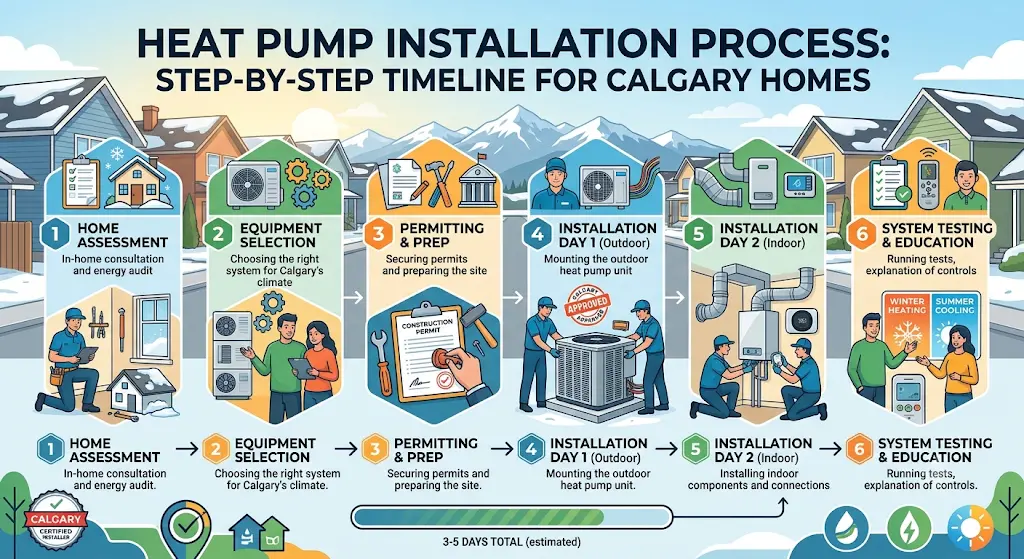
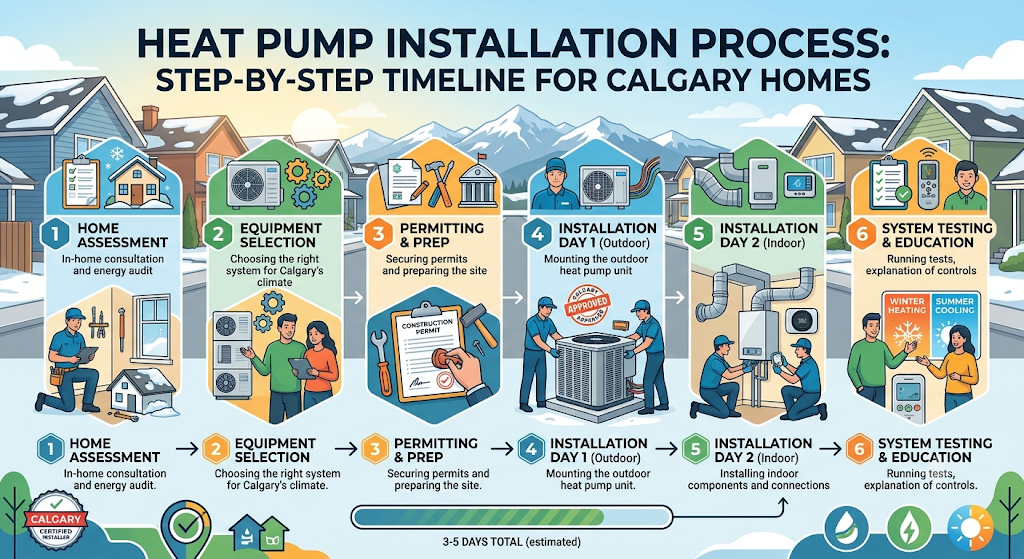
Here is the heat pump installation process from start to finish. Each step builds on the one before it, so skipping or rushing any of them can hurt performance later.
Step 1: Home Assessment and Load Calculation (1–2 hours)
Every good installation starts with measurement. A technician visits your home to check its size, insulation, windows, layout and current heating system. They then perform a heat load calculation, which works out how much heating and cooling your home actually needs.
This step matters because an oversized heat pump short-cycles, wasting energy and wearing out faster. An undersized one struggles on cold Calgary days. Sizing by square footage alone is a common mistake. Accurate sizing is the foundation of the whole project. It is also what separates a quality install from a cheap one.
Step 2: System Selection and Written Quote (1–3 days)
Based on the assessment, your installer recommends a system type: ducted, ductless or a hybrid setup that pairs the heat pump with your existing furnace. In Calgary, look for a cold-climate heat pump rated to keep producing heat in very low temperatures. Winter lows here can fall well below -30°C.
You should receive a written quote that covers equipment, labour, materials, permits and warranty terms. Ask about financing options at this stage. For a breakdown of what drives pricing, see our HVAC system cost guide for Calgary.
Step 3: Permits and Scheduling (3–10 business days)
Heat pump work typically involves electrical connections and sometimes gas or mechanical changes, so permits are generally required. A licensed contractor handles the permit applications on your behalf. Requirements can change, so confirm current rules with the City of Calgary or your contractor. Our guide to plumbing permits explains how permitting works for home projects.
Once permits are in place and equipment is available, your installation date is confirmed. Peak seasons, such as the first cold snaps in fall and the first heat waves in summer, can extend scheduling times.
Step 4: Site Preparation (1–2 hours)
On installation day, the crew protects your floors and furniture. They then confirm the placement of the outdoor unit and the indoor equipment.
Good outdoor placement matters in Alberta. The unit should sit on a level pad with clearance from walls and fences. It should also be raised above expected snow depth, and positioned so that snow, ice and roof runoff don’t pile up around it. Indoor units are placed for even airflow and easy access for maintenance.
Step 5: Removing the Old Equipment, If Applicable (1–3 hours)
If the heat pump is replacing an air conditioner, the old outdoor unit and indoor coil are removed. Refrigerant is recovered by certified technicians, as required by law. It is never vented into the air. If you are keeping your furnace for a hybrid system, it stays in place and is prepared for integration.
Step 6: Mounting the Outdoor and Indoor Units (2–5 hours)
The outdoor unit is set on its pad or wall brackets and secured. The indoor unit is installed in one of three ways:
- Ducted: an indoor coil or air handler connects to your existing ductwork.
- Ductless: a wall-mounted or ceiling cassette head is fixed to the wall.
- Hybrid: the heat pump coil is fitted above or beside your furnace.
For ductless systems, a small hole is drilled through the wall to run the refrigerant lines between the indoor and outdoor units.
Step 7: Refrigerant Lines, Electrical and Drainage (2–4 hours)
This is the most technical part of the installation. Technicians run insulated refrigerant lines between the units, connect the electrical supply and wire the thermostat or control system. They also set up condensate drainage. Heat pumps produce water during operation and defrost cycles, so the drain must be routed to avoid freezing or pooling.
The electrical panel must handle the added load. If it can’t, an upgrade may be needed. This is one of the most common reasons a project takes longer than first expected, so ask about it during your assessment.
Step 8: Evacuation, Leak Testing and Charging (1–2 hours)
Before the system is switched on, technicians pull a vacuum on the refrigerant lines to remove air and moisture. These would otherwise cause corrosion and reduce efficiency. They then pressure-test for leaks and charge the system with the correct amount of refrigerant.
Rushing this step is one of the most common causes of early failure. A careful installer will not skip it, even on a short day.
Step 9: Commissioning and Performance Testing (1–2 hours)
Commissioning means testing the system in both heating and cooling modes. The technician checks:
- Airflow at each vent or indoor unit
- Refrigerant pressures and temperature differences
- Thermostat communication and settings
- The defrost cycle
- Noise levels and vibration
Problems found here are fixed before the crew leaves.
Step 10: Final Inspection and Homeowner Walkthrough (30–60 minutes)
If the permit requires an inspection, it is arranged after installation. Your installer then walks you through the system. They explain the thermostat, the best temperature settings for Calgary winters, filter care and what normal operation sounds like. You should also receive your warranty registration details and a maintenance schedule.
Heat Pump Installation Timeline at a Glance
| Stage | Typical time |
| Home assessment and load calculation | 1–2 hours |
| Quote and system selection | 1–3 days |
| Permits and scheduling | 3–10 business days |
| Installation on site | 1–3 days |
| Testing and commissioning | 1–2 hours |
| Final inspection | Scheduled after install |
| Total, start to finish | About 2–4 weeks |
What Can Delay a Heat Pump Installation in Calgary?
Most delays come from preparation issues, not the installation itself. Common causes include:
- Electrical panel upgrades: older homes may need more capacity.
- Ductwork problems: leaky, undersized or damaged ducts may need repair first.
- Permit wait times: busy seasons slow approvals.
- Equipment availability: specific cold-climate models can have lead times.
- Weather: heavy snow, extreme cold or high winds can postpone outdoor work.
- Access issues: blocked utility rooms, locked gates or tight crawl spaces.
A good contractor flags these early. Ask them directly about each one during your assessment.
How to Prepare Your Home for Heat Pump Installation
A little preparation makes installation day faster and smoother. Before the crew arrives:
- Clear a path from the front door to the installation areas.
- Move furniture and valuables away from indoor unit locations and work areas.
- Make sure the electrical panel and utility room are accessible.
- Clear snow and ice from the outdoor installation area.
- Secure pets in a separate room.
- Confirm someone 18 or older will be home to approve the work.
What Happens After Installation?
Your heat pump is working as soon as commissioning is complete, but a few habits protect your investment:
- Check and clean or replace filters regularly. Monthly checks are a good habit for the first few months.
- Keep snow, ice and debris clear of the outdoor unit through winter.
- Don’t set the thermostat back dramatically. Heat pumps work best at steady temperatures.
- Schedule yearly maintenance. See how often HVAC maintenance is needed in Calgary.
If something seems off in your first winter, check our heat pump not heating troubleshooting guide. If the problem continues, our team handles heat pump repair too.
Why Professional Installation Matters
Heat pumps involve refrigerant handling, electrical work and precise system charging. Mistakes can void warranties, reduce efficiency and create safety hazards. Licensed technicians have the training, tools and permits to do this correctly. Hiring a qualified contractor also protects you if something goes wrong later. Our HVAC contractor hiring checklist lists the questions to ask before you sign a quote. If you want to understand how installation works across other systems, read what HVAC installation involves.
Frequently Asked Questions
How long does a heat pump installation take?
Most installations take one to three days on site. Ductless mini-splits with a single indoor unit can often be finished in one day. Ducted or multi-zone systems take longer. Including permits and scheduling, the whole process typically runs two to four weeks.
Can a heat pump be installed in winter in Calgary?
Yes. Installers work year-round in Calgary. Extreme cold or heavy snow can delay outdoor work for a day or two, and your installer will reschedule as needed. Installing in fall or winter can also mean shorter waits than the busy early summer season.
Do I need a permit to install a heat pump in Calgary?
In most cases, yes. Electrical work and sometimes gas or mechanical changes require permits. A licensed contractor normally applies for these for you. Check current requirements with the City of Calgary or your installer.
Do I need to replace my furnace when I install a heat pump?
Not necessarily. Many Calgary homeowners choose a hybrid setup, keeping the furnace as backup heat on the coldest days. Whether this makes sense depends on your furnace’s age and efficiency. If it is near the end of its life, see our furnace installation options.
What is the difference between ducted and ductless heat pump installation?
Ducted systems use your existing ductwork to distribute air through the whole home. Ductless systems use wall-mounted indoor units connected by refrigerant lines, with no ducts needed. Ductless installs are usually quicker and less invasive, while ducted systems suit homes that already have good ductwork.
Can I install a heat pump myself?
It isn’t recommended. Heat pump installation requires certified refrigerant handling, electrical work and permits. DIY installation can void manufacturer warranties and cause safety and performance problems.
Ready to Start Your Heat Pump Installation?
Knowing the process makes the project far less stressful. At ProStar Plumbing & Heating, we handle every step for homeowners across Calgary, Airdrie, Cochrane, Okotoks, Chestermere and surrounding service areas, from the first home assessment to the final walkthrough.
Explore our heat pump installation service or contact us to book a free assessment and get a clear timeline for your home.