
A sump pump that dies during heavy rain or spring snowmelt leaves you with hours, not days, before water reaches your basement floor. The right first moves are simple: stay safe around water and electricity, check the obvious causes, and call a 24/7 plumber early rather than hoping the rain eases.
This guide walks through what to do in the first few minutes, how to tell a quick repair from a full emergency sump pump replacement, what a plumber does on arrival, and how to make sure the next storm does not catch you out.
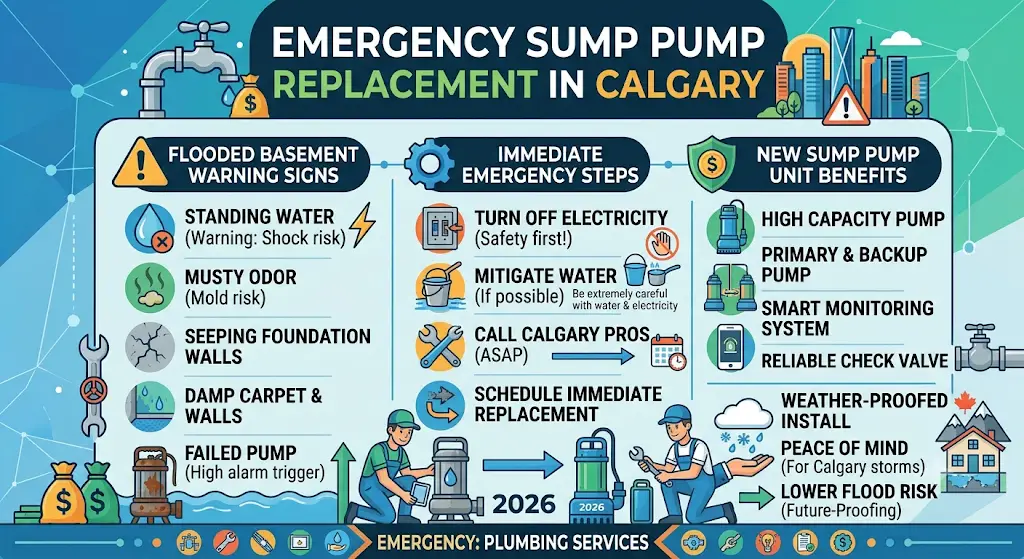
What to Do Right Now If Your Sump Pump Stops Working
Follow these steps in order:
- Put safety first. If water is above your electrical outlets or you smell gas, leave and call 911, as the City of Calgary advises. Never wade into standing water while power is on, and stay away from the electrical panel if it sits in the wet area.
- Check the power from a dry spot. Confirm the pump is plugged in, the breaker or GFCI has not tripped and no extension cord has come loose.
- Unplug before you touch anything. Only then look at the float switch. Debris or a shifted pump can jam it in the “off” position.
- Check the outside discharge point. A blocked or frozen discharge line stops the pump from moving water away, even when the motor is fine.
- Move belongings off the floor. Lift boxes, electronics and furniture legs away from the wet zone while you wait for help.
- Call a 24/7 plumber. If steps two to four do not restore the pump within a few minutes, do not wait for the weather to clear.
One warning: do not run a hose to a neighbour’s yard, the lane or a floor drain just to move water quickly. The City’s discharge rules still apply in a hurry, and water sent to the wrong place can create a bigger problem for you and your neighbours.
For general tips while you wait, see our guide to what to do before an emergency plumber arrives.
Why Sump Pumps Fail When You Need Them Most
Sump pumps tend to fail during the heaviest use, because that is when every weak point is tested at once. Angi lists the most common causes:
- Power outages. Storms often knock out power, and a pump with no backup stops with it.
- A stuck or faulty float switch. The pump never gets the signal to start.
- Clogs. Mud, stones and debris can block the pit or the discharge line.
- An overwhelmed or wrongly sized pump. If it cannot keep up with incoming water, the pit overflows.
- Age. Most pumps last 7 to 10 years, and float switches often wear out sooner.
- Skipped maintenance. Built-up debris reduces performance until the pump quits.
Several of these are preventable. Our sump pump maintenance guide and the post on why Calgary homes need a sump pump explain how the system is meant to work.
Repair or Replace in an Emergency?
Not every failure means a new pump. A plumber will usually decide on the spot based on age, condition and what failed.
| What You Find | Likely Outcome | Why |
|---|---|---|
| Pump under 5 years old, float stuck or discharge clogged | Repair | The motor is healthy and the fault is isolated |
| Motor hums but will not pump, or will not start at all | Often replace | A seized or burnt-out motor rarely justifies repair |
| Pump 7 to 10 years old or older | Replace | Age raises the odds of another failure soon |
| Visible rust, cracks or heavy corrosion | Replace | Damage will keep getting worse |
| Second or third repair in a short span | Replace | Repeat repairs add up to more than a new pump |
| Pump runs but the pit still overflows | Replace or upsize | It may be too small for your home |
If the fault looks minor, our sump pump repair service can often get you running again. If your pump is simply not turning on, the troubleshooting guide helps you rule out simple causes first.
What Happens During an Emergency Sump Pump Replacement?
Once a plumber is on site, a typical visit looks like this:
- Safety check. The plumber confirms power and water conditions are safe before working near the pit.
- Diagnosis. They test the float, check valve, discharge line and wiring to confirm the pump is the problem.
- Clear quote. You get a price for the replacement before work starts.
- Removal. The old pump is disconnected and lifted out, and the pit is cleared of debris.
- Installation. The new pump is set in place, the discharge line is reconnected and a check valve is fitted if needed.
- Testing. The pit is filled with water to confirm the pump starts, pumps and shuts off correctly.
Once the pit and discharge line are sound, the work usually takes one to three hours. If your home has no pit at all, you need a new system, which we cover in our sump pump installation service.
Does Emergency Service Cost More?
It can, depending on the company. Some plumbers add overtime or after-hours surcharges. ProStar’s 24/7 emergency service carries no overtime charges, so the price follows the job, not the clock.
For a typical swap into an existing pit, Calgary homeowners should expect roughly $600 to $1,200, with a battery backup adding more. Our sump pump replacement cost guide breaks down every factor, and the installation cost guide covers brand-new pits.
Plumber or Restoration Company: Who Should You Call?
They solve different problems, and a flooded basement may need both.
- A plumber diagnoses and replaces the pump, fixes the discharge line and checks the rest of the drainage system.
- A water restoration company removes standing water, dries the space and handles mould prevention.
If water has already spread, call a plumber first so the pump is working before the cleanup starts. Otherwise the water keeps coming back. Note that the City of Calgary only assesses basement flooding, does not pump water out of basements and does not respond to sump pump calls, so the repair and cleanup are the homeowner’s responsibility.
How to Make Sure It Does Not Happen Again
An emergency is the best time to fix the weakness that caused it. Consider these upgrades during your replacement:
- Battery backup. HomeServe says a backup typically runs about 5 to 12 hours, depending on battery size and how hard the pump works. Replace the battery every 3 to 5 years and test it yearly.
- The right size. An undersized pump cannot keep up in a heavy storm. Our guide to choosing the right sump pump size for a Calgary home explains what to ask for.
- The right type. Submersible and pedestal pumps behave differently under heavy use. See our comparison of pedestal, submersible and battery backup pumps.
- Early warning signs. A pump that runs nonstop, makes a screeching sound, shows debris in the pit or is past the 10-year mark is telling you something. Our list of warning signs your pump needs repair shows what to watch for.
- A yearly check. Test your sump pump before spring or book a professional inspection so you find weak points on a dry day.
What to Do After the New Pump Is In
The job is not finished when the pump starts. Use the next few days to close the loop:
- Watch the first few cycles. Listen for smooth starts and stops, and confirm water leaves through the discharge line outside.
- Write down the details. Note the install date, pump model and warranty terms, and set a reminder for the first test.
- Dry the space. Move wet items out, run fans and watch for musty smells that point to hidden moisture.
- Document any damage. Take dated photos of affected areas before you clean up, in case you need to talk to your insurer.
- Check your drainage. Make sure downspouts and grading carry roof and yard water away from the foundation, so the pump has less to handle.
If you notice the pump short-cycling or running far more than before, tell your plumber early. It can point to a sizing or float problem that is easier to fix now than mid-storm.
Can You Replace a Sump Pump Yourself in an Emergency?
In the middle of a storm, we do not recommend it. Working near water and live electricity is the biggest risk, and a rushed swap can leave a backwards check valve or a loose fitting that fails again. Once the water is down and the power is off, a confident homeowner can handle a like-for-like swap by following our step-by-step replacement guide. For anything more than a simple swap, call a professional.
Need Emergency Sump Pump Replacement in Calgary?
ProStar Plumbing & Heating has served Calgary since 1996. Our licensed, bonded and insured team offers 24/7 emergency plumbing with no overtime charges, and our sump pump replacement service covers Calgary homes and basements of every age.
We also work in Airdrie, Chestermere, Cochrane, Okotoks and Springbank. When you search for a sump pump replacement company near you in a storm, ask about 24/7 availability, after-hours pricing and warranty terms before you book. Call (403) 250-7232 or contact us online.
Frequently Asked Questions
How fast can a sump pump be replaced in an emergency?
Once a plumber is on site and the pit and discharge line are in good shape, a replacement usually takes one to three hours. Extra repairs, a battery backup or a damaged pit add time, and a brand-new pit is typically a full-day job.
Will my sump pump work during a power outage?
No. A standard sump pump needs electricity. A battery backup can keep it running for roughly 5 to 12 hours, depending on battery size and how often the pump runs, so it is the most reliable protection against storm outages.
Is it safe to go into my basement if the sump pump failed?
Not if water is near outlets, cords or the electrical panel. The City of Calgary advises staying out of a seeping basement and calling 911 if you smell gas or water is above the outlets. When in doubt, wait for a professional.
How do I know if my pump failed or the power did?
Check whether other basement lights and outlets work and whether the breaker or GFCI has tripped. If power is fine and the pump will not start, hums without pumping or runs without moving water, the pump or float switch is the likely culprit.
Can a failed sump pump be repaired instead of replaced?
Sometimes. A stuck float switch, a clogged discharge line or a worn check valve on a pump under about five years old is often repairable. A seized motor, heavy rust or a pump past 7 to 10 years usually points to replacement instead.
Who pays if a failed sump pump floods my basement?
The City of Calgary says homeowners are responsible for maintaining the pump and for seepage caused by a malfunction. Your insurer may offer water backup coverage, so check your policy wording before a storm.