
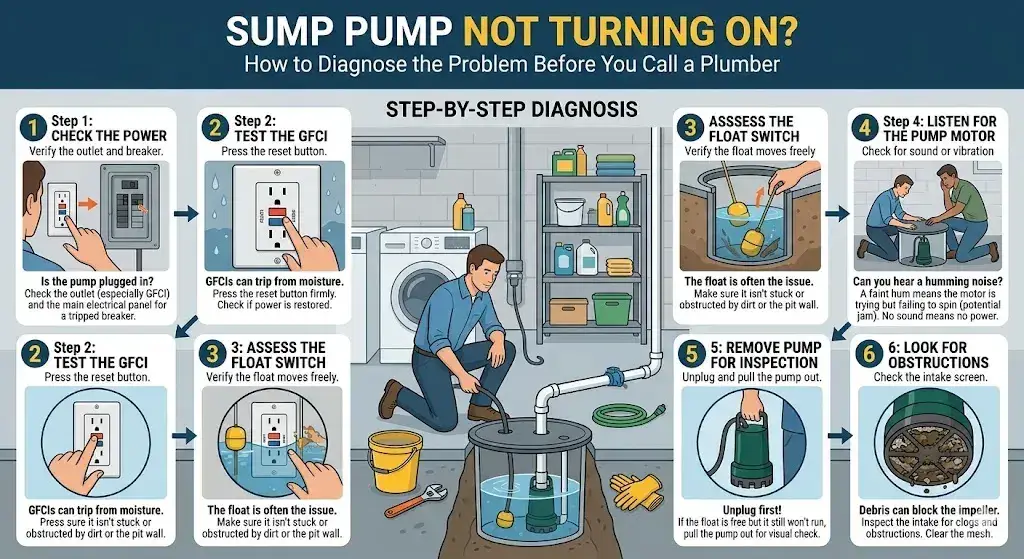
A sump pump is one of the most important systems protecting your home from water damage. Most homeowners rarely think about it until they notice water rising in the basement. When a sump pump not turning on becomes a problem, panic usually follows quickly — especially during heavy rain, spring snowmelt, or sudden storms.
The good news is that not every sump pump issue requires immediate replacement. Many common problems can be identified through simple sump pump troubleshooting steps before calling a professional. Understanding how your system works can help you prevent costly water damage, avoid unnecessary repairs, and reduce the risk of basement flooding.
If you discover water in the sump pit but the pump not running, there may be several possible causes, including electrical issues, a stuck float switch, clogged discharge lines, or motor failure. In colder climates, frozen pipes and drainage problems can also create serious complications during winter and spring.
This guide will walk you through how to diagnose common sump pump problems, explain the warning signs of failure, and help you determine when it’s time to contact a professional for emergency sump pump repair. Whether your pump stopped working during a storm or simply won’t activate anymore, these troubleshooting steps can help you identify the issue safely and quickly.
Why Your Sump Pump Matters More Than You Think
Many homeowners underestimate how important a sump pump is until their basement starts flooding. A properly functioning sump pump acts as the first line of defense against water intrusion by redirecting groundwater away from your home’s foundation.
Without reliable basement waterproofing and drainage support, excess moisture can quickly damage floors, drywall, insulation, and personal belongings. Even minor water accumulation can lead to mold growth, unpleasant odors, and long-term structural damage.
A sump pump works by collecting excess groundwater inside a sump pit. Once the water reaches a certain level, the float switch activates the pump, which pushes water safely outside through a discharge line. When everything operates correctly, most homeowners barely notice the system working.
However, when a sump pump stopped working, the consequences can escalate quickly. Water can rise rapidly during storms, leading to expensive repairs and dangerous moisture buildup. In severe cases, homeowners may require professional water damage restoration and major basement repairs.
Modern flood prevention systems are designed to protect homes during changing weather conditions, but even the best systems require routine maintenance. Ignoring warning signs can increase the likelihood of a plumbing emergency when you least expect it.
Some of the most common consequences of sump pump failure include:
- Flooded basements
- Foundation cracks
- Mold and mildew growth
- Electrical hazards
- Damaged flooring and furniture
- Increased humidity and basement moisture control problems
Because of these risks, understanding how to diagnose a sump pump not pumping water is essential for protecting your property.
First Signs Your Sump Pump Is Not Working Properly
Sump pumps usually show warning signs before they completely fail. Recognizing these issues early can help you prevent major flooding and expensive repairs.
Common Warning Signs Homeowners Ignore
One of the first symptoms homeowners notice is unusual noise. Grinding, rattling, or humming sounds may indicate worn components or a failing motor. If your sump pump humming but not working, the motor may be running without successfully moving water.
Another common issue is continuous cycling. If the pump turns on and off repeatedly, the float switch could be stuck or improperly adjusted. A sump pump float switch stuck in one position may prevent proper activation or cause the pump to overwork itself.
You may also notice water remaining inside the sump pit even after the pump should have activated. This often signals drainage problems, discharge pipe blockages, or electrical failure.
Some additional warning signs include:
- Excess vibration during operation
- Rust buildup around the unit
- Bad odors from stagnant water
- Frequent breaker trips
- Slow water removal
- Visible debris inside the pit
Ignoring these issues can eventually lead to complete system failure.
Signs of Sump Pump Failure During Heavy Rain
Heavy rainfall often exposes hidden sump pump issues. During storms, the system experiences its highest workload, making weak components more likely to fail.
A sump pump not turning on during heavy rain may indicate:
- Electrical overload
- Float switch obstruction
- Motor overheating
- Frozen or blocked discharge pipes
- Pump capacity issues
If you notice rising water levels during storms, act quickly. Basement flooding can happen within minutes if the pump cannot keep up with incoming groundwater.
Understanding these early symptoms helps homeowners answer an important question: why is my sump pump not turning on?
Step-by-Step Sump Pump Troubleshooting Before Calling a Plumber
If your sump pump suddenly stops working, you can safely perform several basic checks before contacting a plumber. These troubleshooting steps may help identify the issue quickly.
Step 1 — Check the Power Supply
Many sump pump failures are caused by simple electrical issues. Start by checking whether the pump is plugged in securely.
Sometimes vibrations cause plugs to loosen over time. Verify that the outlet is functioning properly by plugging in another device.
Next, inspect your electrical panel. A tripped breaker may prevent the pump from receiving power. If the sump pump breaker keeps tripping, this could signal motor problems or wiring issues.
Also check for:
- GFCI outlet resets
- Damaged power cords
- Signs of water exposure near electrical connections
- Power outage sump pump issues
Electrical problems are among the most common reasons a sump pump won’t activate. However, avoid touching electrical components if standing water is present nearby.
Step 2 — Inspect the Float Switch
The float switch is one of the most important components in the system. It tells the pump when to turn on as water rises in the sump pit.
A sump pump switch not working often results from debris, tangled cords, or restricted movement. Sometimes the float becomes stuck against the side of the pit.
To inspect the float:
- Disconnect the power supply
- Remove debris from the pit
- Check whether the float moves freely
- Perform a manual sump pump float test by lifting the float gently
If the pump activates when the float is manually lifted, the switch may simply need repositioning or cleaning.
This is one of the easiest forms of DIY sump pump troubleshooting homeowners can perform safely.
Step 3 — Examine the Discharge Line
The discharge line carries water away from your home. If this pipe becomes blocked, frozen, or damaged, the pump may fail to remove water properly.
A clogged sump pump discharge line can force water back into the pit and strain the motor. In colder climates, frozen discharge lines are especially common during winter.
Signs of discharge problems include:
- Water returning to the sump pit
- Ice buildup outside
- Weak water flow
- Strange gurgling sounds
Check the outdoor discharge point for obstructions such as dirt, leaves, or ice. A discharge pipe blockage can significantly reduce performance and create serious drainage system maintenance issues.
If your sump pump not pumping water, this step is critical.
Step 4 — Listen to the Motor
The motor provides valuable clues about the condition of the pump.
If the motor makes noise but no water moves, internal components may be damaged. A failing impeller or seized bearing can prevent operation.
Common motor-related symptoms include:
- Humming without pumping
- Burning smells
- Excessive heat
- Loud grinding noises
- Frequent shutdowns
These signs may indicate sump pump motor failure. In many cases, older units experiencing repeated problems should be replaced rather than repaired.
If you are wondering how to know if your sump pump motor is bad, persistent overheating and humming are major warning signs.
Step 5 — Test the Pump With Water
One of the easiest ways to test the system is by pouring water into the sump pit.
This method helps homeowners identify whether the float switch and pump activate properly.
Easy Ways to Test a Sump Pump at Home
- Fill a bucket with water
- Slowly pour water into the pit
- Watch whether the float rises
- Observe whether the pump activates
- Check whether water drains properly
If the pump fails to activate, you may be dealing with:
- Electrical problems
- Float switch failure
- Motor damage
- Faulty wiring
- Internal clogs
This simple test is often the fastest way to begin a faulty sump pump diagnosis.
What Causes a Sump Pump to Stop Working?
Many homeowners ask: what causes a sump pump to stop working?
The answer usually involves one or more common mechanical or electrical issues.
Electrical Failures
Electrical problems are one of the leading causes of sump pump failure. Power outages, damaged cords, tripped breakers, and faulty outlets can all interrupt operation.
Storms frequently create temporary power failures that disable sump pumps precisely when they are needed most.
Aging Equipment
Most sump pumps last between 7 and 10 years depending on usage and maintenance. Older units naturally experience wear over time.
An aging pump may develop:
- Corroded components
- Reduced pumping power
- Motor wear
- Sensor malfunctions
If your system frequently malfunctions, replacement may be more cost-effective than repeated repairs.
Poor Maintenance
Lack of maintenance increases the likelihood of failure. Dirt, gravel, and debris can accumulate inside the pit and damage moving components.
Routine sump pump maintenance tips include:
- Cleaning the pit regularly
- Testing the float switch monthly
- Checking discharge pipes
- Removing debris buildup
- Inspecting electrical connections
Neglecting maintenance often leads to common reasons sump pumps stop working.
Frozen or Blocked Drain Lines
Cold temperatures frequently cause frozen discharge pipes. When water cannot exit properly, pressure builds inside the system.
This may eventually cause the pump to overheat or stop functioning entirely.
Overworked Pumps During Storms
Heavy rain places enormous stress on sump pumps. If the system is undersized or aging, it may struggle to keep up with incoming groundwater.
This is particularly common during sudden snowmelt or intense rainfall.
When DIY Troubleshooting Is Not Enough
While some issues can be diagnosed safely, certain situations require immediate professional help.
You should contact a plumber immediately if:
- The basement is actively flooding
- You smell burning from the motor
- The breaker repeatedly trips
- Electrical components are exposed to water
- The pump completely fails during storms
- Water levels continue rising rapidly
Delaying repairs can lead to severe water damage restoration costs and long-term structural problems.
Professional plumbers can perform advanced sump pump inspection services to identify hidden issues that homeowners may overlook.
If you are facing a plumbing emergency, quick action is essential.
How to Prevent Future Sump Pump Problems
Preventive maintenance is the best way to avoid unexpected breakdowns.
Monthly Maintenance Checklist
A proper sump pump maintenance checklist should include:
- Testing the float switch
- Cleaning debris from the pit
- Inspecting discharge pipes
- Verifying electrical connections
- Checking backup battery systems
- Monitoring unusual noises
Routine maintenance significantly reduces the risk of sudden failure.
Seasonal Maintenance Tips for Homeowners
Winter conditions create additional risks for sump pumps. Frozen pipes and snowmelt can overwhelm older systems.
To reduce winter-related issues:
- Insulate exposed discharge pipes
- Remove ice buildup regularly
- Test the pump before heavy snowfall
- Keep outdoor drainage clear
These steps help homeowners understand how to prevent sump pump failure in winter.
Consider Installing a Backup System
A sump pump backup system provides additional protection during storms or power outages.
Battery backup systems are especially useful during severe weather events when electricity may fail unexpectedly.
However, homeowners should still monitor for:
- Battery corrosion
- Charging problems
- Backup pump activation issues
Even the best backup systems require regular testing.
Repair or Replace? How to Decide
Sometimes repairing an older sump pump is no longer practical.
Signs You Need Replacement
Some clear sump pump replacement signs include:
- Frequent repairs
- Loud operation
- Reduced pumping performance
- Visible rust or corrosion
- Constant cycling
- Repeated motor overheating
If the system is nearing the end of its lifespan, replacement may provide better long-term protection.
Choosing the Right System
The best sump pump for basement flooding depends on:
- Basement size
- Water table conditions
- Storm frequency
- Pump capacity requirements
- Backup system options
A professional inspection can help determine the ideal solution for your home.
When to Call a Professional Plumber
Although homeowners can perform basic troubleshooting, some problems require expert diagnosis.
Professional plumbers can identify:
- Hidden drainage issues
- Electrical hazards
- Improper installation
- Motor failure
- Backup system problems
If your system repeatedly malfunctions, scheduling professional sump pump repair service is the safest option.
Homeowners searching for sump pump repair near me should prioritize experienced plumbing professionals who understand local drainage conditions and seasonal weather challenges.
Professional service becomes especially important when preparing for storm season or preventing future basement flooding.
Frequently Asked Questions
Why is my sump pump not turning on even with water in the pit?
This usually indicates float switch problems, electrical issues, or motor failure. A clogged discharge line can also prevent proper operation.
Can I fix a sump pump myself?
Some minor issues like cleaning debris or resetting breakers can be handled safely by homeowners. However, electrical problems and motor repairs should be left to professionals.
What causes a sump pump float switch to get stuck?
Debris buildup, tangled cords, and improper positioning inside the sump pit commonly cause float switch problems.
How often should I test my sump pump?
Most experts recommend testing your system every month and before major storms.
What are the signs of sump pump motor failure?
Humming noises, overheating, burning smells, and failure to pump water are common signs.
Can frozen pipes stop a sump pump from working?
Yes. Frozen discharge lines can block water flow and cause pressure buildup inside the system.
Conclusion
Discovering a sump pump not turning on can be stressful, especially during heavy rain or snowmelt. Fortunately, many common issues can be diagnosed through careful troubleshooting before calling a plumber.
Checking the power supply, float switch, discharge line, and motor condition can help homeowners identify the cause of many common sump pump problems. Preventive maintenance also plays a major role in reducing unexpected failures and protecting your basement from water damage.
However, if the system continues malfunctioning or flooding risks increase, professional help is the safest option. Fast action can prevent major structural damage, costly repairs, and long-term moisture problems.
A reliable sump pump is one of the most important defenses your home has against basement flooding. Regular inspections, proper maintenance, and timely repairs can keep your system operating when you need it most.